


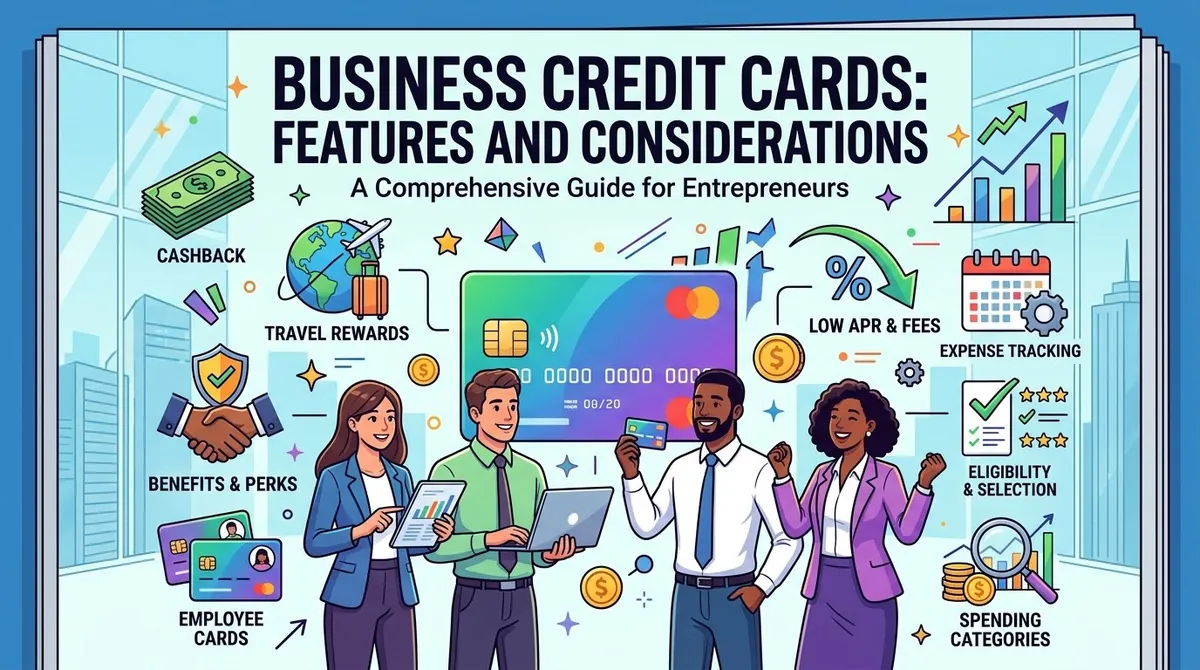
Businesses often need convenient ways to pay for advertising, travel, inventory, software subscriptions, office expenses, and other operating costs. A business credit card can provide a revolving source of purchasing power while helping companies keep business expenses separate from personal spending.
Business credit cards can also offer tools for employee spending, expense tracking, rewards, and financial management. However, they are still a form of credit, and interest charges, fees, credit requirements, and repayment terms can vary significantly between cards.
Before applying, businesses should consider how the card will be used, how balances will be repaid, what fees apply, and whether the account supports the company's broader financial goals.
What Is a Business Credit Card?
A business credit card is a revolving credit account designed for business-related purchases. It works similarly to a personal credit card, allowing the cardholder to make purchases up to an established credit limit and repay the balance over time.
Businesses can use these cards for everyday expenses or short-term financing needs. The U.S. Small Business Administration notes that business credit cards can help companies separate business and personal purchases, track spending, and potentially establish business credit. (sba.gov)
A business credit card does not necessarily mean that the business owner has no personal responsibility for the account. Depending on the issuer and application, a personal credit check or personal guarantee may be required.
Key Features of Business Credit Cards
Credit Limits
The credit limit determines how much the business can generally charge to the account. The appropriate limit depends on factors such as business revenue, credit history, spending patterns, and the issuer's underwriting criteria.
Businesses should consider whether the available limit is sufficient for expected expenses without encouraging the company to take on more debt than it can comfortably repay.
Annual Percentage Rate
The annual percentage rate (APR) represents the cost of carrying a balance. A card may have different rates for purchases, cash advances, or other transactions.
Some cards offer introductory APR periods. Businesses should check when the promotional period ends and what rate applies afterward. The Consumer Financial Protection Bureau recommends paying attention to introductory rates and the terms that apply after the promotional period. (consumerfinance.gov)
Rewards Programs
Many business credit cards offer rewards such as cash back, points, or travel-related benefits.
Rewards may be structured around particular spending categories, such as travel, advertising, office supplies, shipping, or telecommunications. The SBA recommends considering whether a card's rewards and benefits match the company's actual spending patterns. (sba.gov)
Businesses should also examine redemption rules, spending requirements, expiration policies, and any restrictions associated with rewards.
Employee Cards
Businesses can often issue additional cards to employees. This can make it easier to manage employee purchases while keeping transactions connected to a central account.
Some platforms provide individual spending limits, transaction controls, alerts, and reporting for employee cards. These features can help businesses establish clearer spending policies and monitor expenses.
Businesses should also understand who is responsible for charges made by employee cardholders and what protections apply to unauthorized transactions.
Expense Management
Business cards can simplify expense tracking by consolidating transactions into statements and online account dashboards.
Some issuers provide integrations with accounting and expense-management software. Businesses can use these tools to categorize transactions, reconcile expenses, and simplify recordkeeping.
Common Business Uses
Business credit cards can be used for a wide range of operating expenses.
**Advertising and marketing:** Companies can pay for digital advertising, promotional services, and marketing subscriptions.
**Travel:** Employees can use cards for flights, hotels, rental cars, meals, and other approved business travel expenses.
**Software and subscriptions:** Recurring expenses such as software, cloud services, communications tools, and online platforms can be charged automatically.
**Office expenses:** Businesses can use cards for supplies, equipment, shipping, and other routine purchases.
**Short-term cash flow:** A credit card can provide temporary purchasing flexibility when expenses occur before expected revenue is received.
However, using revolving credit for ongoing cash-flow problems can become expensive if balances are carried for extended periods.
Business Credit and Personal Credit
Business credit cards can play a role in establishing a company's credit history, but reporting practices differ between card issuers.
The SBA notes that business credit applications may involve reviewing the owner's personal credit, particularly when the business has limited credit history. It also recommends understanding whether a card reports account activity to business credit reporting agencies. (sba.gov)
Businesses should therefore determine:
- Whether the issuer checks the owner's personal credit
- Whether a personal guarantee is required
- Whether account activity is reported to commercial credit bureaus
- Whether payment history can affect the owner's personal credit
- What happens if the business cannot repay the balance
These details can differ by issuer and product.
Fees to Consider
The advertised rewards or introductory offer should not be the only consideration when comparing cards. Businesses should examine the complete fee structure.
Potential charges can include:
- Annual fees
- Foreign transaction fees
- Late payment fees
- Cash advance fees
- Balance transfer fees
- Employee card fees
- Other account or service charges
The CFPB notes that fees are an important part of the overall cost of a credit card and should be evaluated alongside APR and benefits. (consumerfinance.gov)
A card with an annual fee may make sense for a business that receives enough value from rewards or other benefits, while a no-annual-fee option may be more appropriate for a company with lower spending.
Security and Spending Controls
Business credit cards can provide additional tools for controlling employee spending. Businesses may be able to establish individual limits, restrict certain transaction types, and receive notifications when purchases are made.
Security features can also help businesses monitor unusual transactions and respond to unauthorized activity.
Because business cards can provide access to company funds, businesses should establish clear internal policies covering who can use cards, which expenses are permitted, required documentation, and how transactions are reviewed.
How to Compare Business Credit Cards
Before selecting a card, businesses should compare several factors:
**Spending Patterns**
Review where the company spends the most money. A business with substantial travel expenses may have different priorities from a company that primarily spends on advertising, inventory, or software.
**Cost of Carrying a Balance**
If the business expects to pay the statement balance in full each month, rewards and fees may be particularly important. If balances are likely to be carried, the APR and financing costs become more significant.
**Rewards and Benefits**
Calculate the potential value of rewards based on actual business spending rather than advertised maximum rewards.
**Employee Management**
Consider whether the card provides appropriate employee controls, reporting, alerts, and individual spending limits.
**Credit and Guarantee Requirements**
Review application requirements and determine whether the account requires a personal guarantee or personal credit check.
**Accounting Integration**
If the business already uses accounting or expense-management software, check whether the card integrates with those systems.
Business Credit Cards vs. Business Loans
A business credit card and a business loan serve different purposes.
A credit card provides revolving credit, allowing the business to borrow and repay repeatedly within the account's terms. A business loan generally provides a specific amount that is repaid according to a defined schedule.
Credit cards may be useful for recurring purchases and short-term expenses, while installment financing can be more suitable for larger purchases or longer-term borrowing needs.
Businesses should compare the cost and repayment structure of each option before deciding how to finance an expense.
Final Thoughts
Business credit cards can provide purchasing flexibility, expense-management tools, employee spending controls, and rewards while helping companies separate business and personal expenses. Their usefulness depends largely on how the account is managed and whether its terms fit the company's spending patterns.
Before applying, businesses should review APRs, fees, rewards, credit limits, employee-card features, reporting practices, personal guarantees, and accounting integrations. Understanding these factors can help a company select a card that fits its operational needs without overlooking the costs and responsibilities associated with revolving credit.
References
- U.S. Small Business Administration — 5 Ways to Separate Your Personal and Business Finances
- U.S. Small Business Administration — Business Credit Card Offers: 5 Things to Look Out For
- U.S. Small Business Administration — Is a Secured Business Credit Card Right for You?
- Consumer Financial Protection Bureau — Know Before You Owe: Credit Cards
- Consumer Financial Protection Bureau — Credit Card Key Terms