


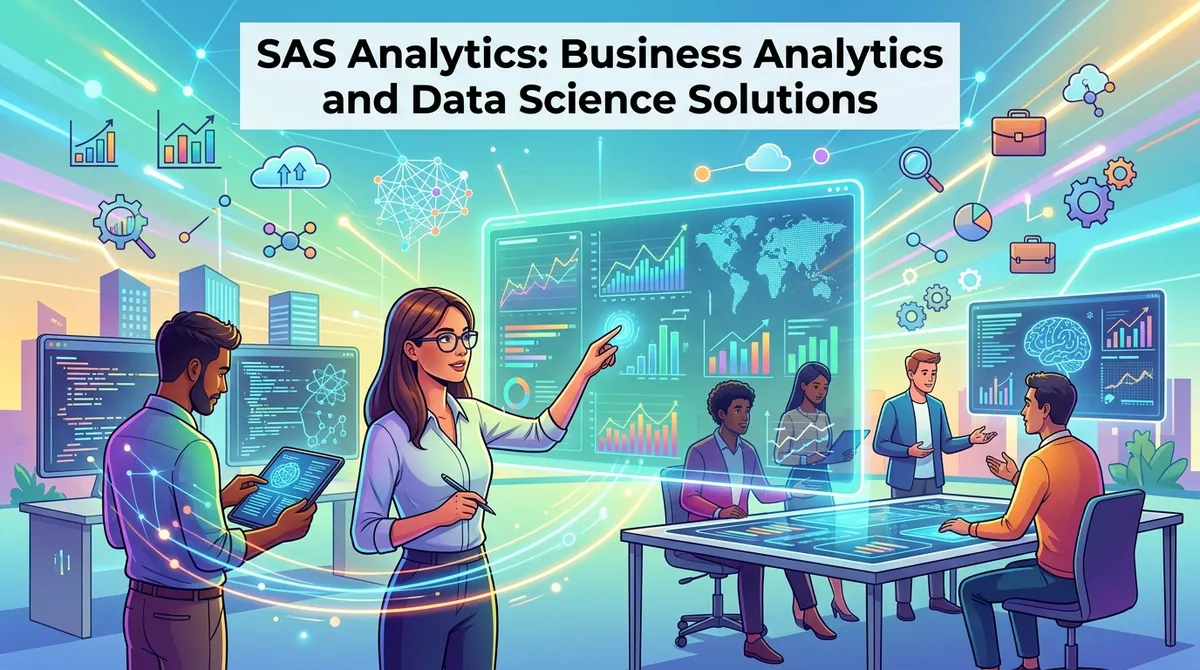
SAS Analytics represents a comprehensive platform combining data management, statistical analysis, artificial intelligence, and business intelligence. The current platform, SAS Viya, enables organizations to "prepare data, develop analytical models, deploy them into business processes, and monitor their performance."
Core Capabilities
The platform supports several key functions:
- Data Management: Connection, preparation, integration, and management of data from multiple sources
- Statistical Analysis: Regression, forecasting, and quantitative techniques for understanding datasets
- Predictive Analytics: Using historical data to estimate future outcomes across applications like fraud detection and demand forecasting
- Machine Learning: Classification, regression, clustering, and automated modeling capabilities
- Artificial Intelligence: Natural language processing, computer vision, and generative AI functions
Deployment and Accessibility
SAS Viya operates across "public cloud, private cloud, hybrid, or on-premises environments" and supports users ranging from data scientists to business analysts through multiple programming languages including Python and R.
Industry Applications
Organizations in financial services, healthcare, retail, and manufacturing leverage SAS for risk analysis, operational planning, customer segmentation, and predictive maintenance.
Implementation Considerations
When evaluating SAS, organizations should assess analytics requirements, data infrastructure, user expertise levels, deployment preferences, governance needs, integration compatibility, scalability demands, and total cost of ownership including implementation and training.