


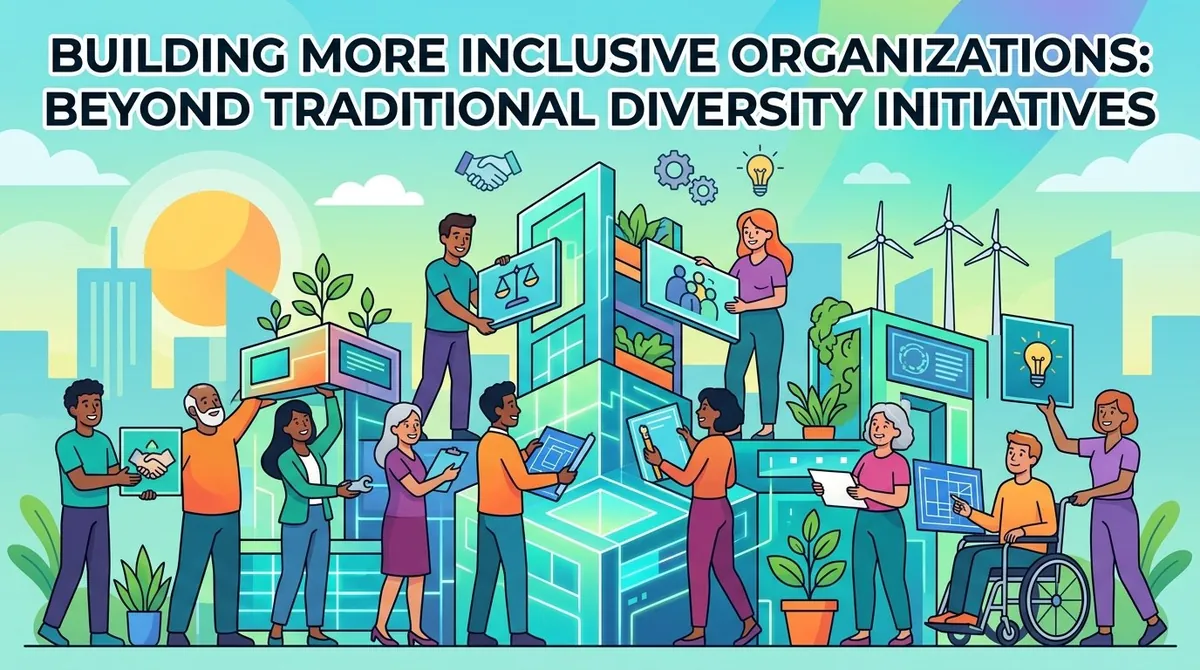
Organizations increasingly recognize that having a diverse workforce is only one part of creating an effective workplace. Employees also need an environment where they can participate, contribute ideas, access opportunities, and feel that their perspectives are considered.
Inclusion focuses on how people experience the organization after they become part of it. Moving beyond traditional diversity initiatives means looking at everyday practices such as recruitment, communication, career development, management, decision-making, and workplace culture.
Understanding Inclusion in the Workplace
Workplace inclusion refers to creating an environment where employees can participate meaningfully and have fair access to opportunities and resources. It is closely related to diversity but addresses a different aspect of the employee experience.
An organization may employ people with different backgrounds and experiences while still having workplace practices that make some employees less able to participate or progress. Inclusion therefore requires attention to how systems and everyday interactions operate.
The goal is not to make every employee's experience identical. It is to create conditions where people can contribute effectively while maintaining consistent organizational standards.
Moving Beyond Traditional Diversity Programs
Traditional diversity initiatives may focus on recruitment targets, awareness campaigns, training sessions, or representation statistics. These activities can provide useful information, but they do not necessarily address every factor that influences employees' experiences.
Organizations can broaden their approach by examining how decisions are made and how opportunities are distributed. This can include reviewing hiring processes, promotion criteria, access to development programs, team structures, and communication practices.
The emphasis shifts from a single program toward examining inclusion throughout the employee lifecycle.
Building Inclusive Recruitment Practices
Recruitment is an important starting point because hiring processes determine who has access to organizational opportunities. Organizations can review job descriptions, sourcing methods, interview structures, and selection criteria to identify unnecessary barriers.
Clear job requirements can help candidates understand what is genuinely necessary for a position. Structured interview processes can also provide greater consistency when comparing candidates.
Recruitment should remain connected to the actual requirements of the role. The objective is to create fair and relevant processes rather than simply increasing the number of applicants.
Creating Equal Opportunities for Development
Inclusion also involves what happens after employees join an organization. Access to training, mentoring, high-visibility projects, and leadership opportunities can influence career development.
Managers can help by discussing development goals with employees and making opportunities more visible across teams. Organizations can also establish clearer criteria for promotions and professional development.
Tracking participation in development programs can provide useful information about whether opportunities are reaching different groups of employees.
The Role of Managers and Leaders
Managers have a significant influence on workplace inclusion because they shape many everyday employee experiences. Their approach to meetings, feedback, workload allocation, communication, and development can affect whether employees feel able to participate.
Inclusive management does not require treating every employee in exactly the same way. Different employees may have different development needs or responsibilities. What matters is maintaining clear standards while ensuring that employees have appropriate opportunities to contribute and progress.
Leaders can also model inclusive behavior by listening to different perspectives and creating appropriate opportunities for employees to raise concerns or suggest improvements.
Creating Inclusive Everyday Practices
Inclusion is often shaped by small, repeated workplace interactions rather than major organizational announcements.
Organizations can strengthen everyday inclusion by:
- Making meetings accessible: Ensure relevant employees have opportunities to contribute and receive necessary information.
- Clarifying expectations: Make responsibilities and performance standards understandable.
- Encouraging different perspectives: Ask for input when decisions would benefit from broader viewpoints.
- Reviewing access to opportunities: Examine who receives training, mentoring, and high-impact assignments.
- Creating feedback channels: Give employees appropriate ways to raise concerns and provide suggestions.
These practices can help make inclusion part of normal organizational operations rather than a separate initiative.
Using Data to Understand Inclusion
Organizations can use workforce data to identify patterns in employee experience and opportunity. Relevant information may include recruitment outcomes, promotion rates, turnover, participation in development programs, and employee survey responses.
Data should be interpreted carefully. Differences in outcomes can have multiple explanations, and numerical patterns alone do not establish why a particular result occurred.
Combining quantitative information with employee feedback can provide more useful context. Surveys, interviews, and focus groups can help organizations understand how employees experience specific processes.
Developing an Inclusive Organization Strategy
Building a more inclusive organization requires a structured approach that connects workplace practices with organizational objectives.
A practical process can include:
- 1Assess current practices: Review recruitment, development, promotion, communication, and management processes.
- 2Identify potential barriers: Use data and employee feedback to understand where employees may experience unnecessary obstacles.
- 3Set specific objectives: Define practical improvements rather than relying only on broad statements.
- 4Engage managers: Give leaders the tools and expectations needed to support inclusive practices.
- 5Measure progress: Track relevant workforce indicators and employee feedback over time.
- 6Review and adjust: Use evidence to determine which initiatives are producing useful results.
This approach helps organizations treat inclusion as an ongoing management responsibility.
Common Challenges
One challenge is treating inclusion as a standalone human resources program. Workplace practices are influenced by managers, executives, teams, and organizational systems, so responsibility cannot rest with one department alone.
Another challenge is relying on a single metric to evaluate progress. Representation statistics may provide useful information, but they do not necessarily show whether employees have equal access to opportunities or feel able to contribute.
Organizations may also encounter disagreement about which changes are necessary. Clear objectives, relevant evidence, and employee feedback can help keep discussions focused on specific workplace practices.
Measuring Progress
Organizations can evaluate inclusion using a combination of workforce data and employee feedback. Useful indicators may include hiring patterns, promotion rates, retention, participation in development opportunities, employee engagement, and responses to workplace surveys.
Qualitative information can help explain the reasons behind numerical patterns. For example, a difference in promotion rates may require further investigation into career pathways, experience requirements, management practices, or access to development opportunities.
Measurement should therefore support learning rather than simply produce a headline statistic.
The Future of Inclusive Organizations
As workplaces continue to evolve, organizations may increasingly view inclusion as part of broader employee experience and organizational effectiveness. Remote and hybrid work, changing workforce expectations, technology, and new approaches to collaboration can all influence how employees participate in organizational life.
The future of inclusion is therefore likely to involve "ongoing examination of workplace systems rather than reliance on isolated initiatives." Organizations can look at how people are recruited, supported, developed, heard, and evaluated throughout their careers.
Building a more inclusive organization ultimately requires consistent attention to everyday practices. By combining clear standards, fair processes, employee feedback, relevant data, and accountable leadership, businesses can create environments where a broader range of employees have meaningful opportunities to contribute and develop.
References
- CIPD — Diversity and Inclusion
- International Labour Organization — Diversity and Inclusion
- OECD — Gender Equality and Inclusion
- U.S. Equal Employment Opportunity Commission — Employer Resources
- Harvard Business Review — Diversity and Inclusion
- World Economic Forum — Diversity, Equity and Inclusion
- United Nations Global Compact — Diversity and Inclusion