


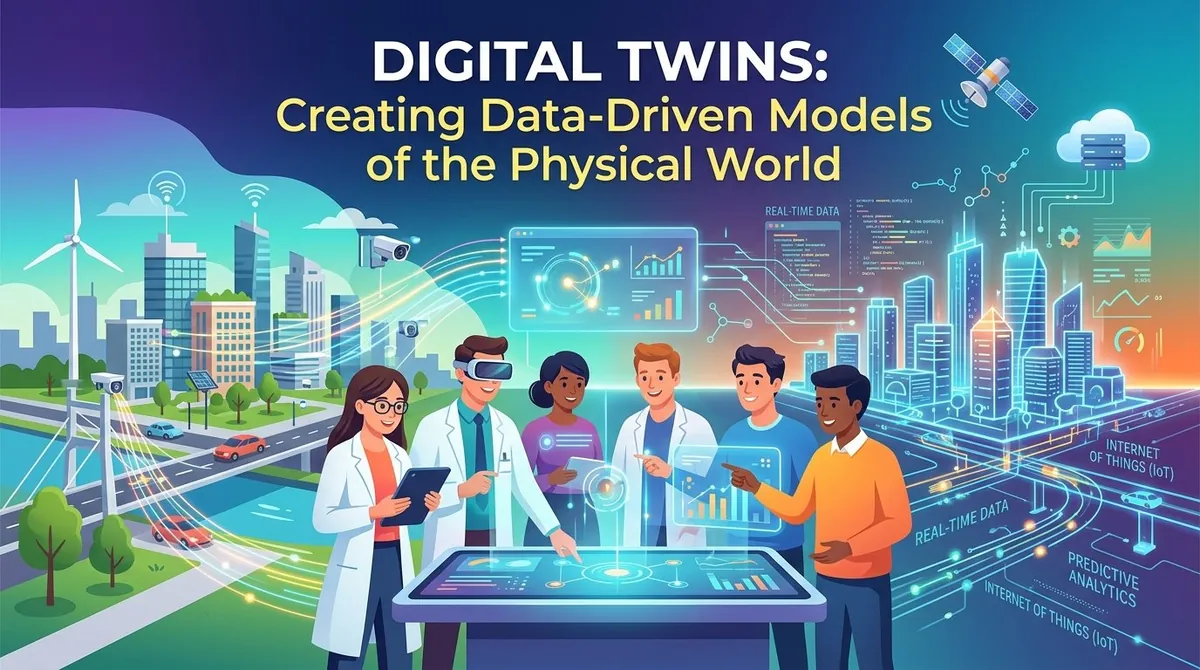
Businesses increasingly use digital technologies to understand and manage physical assets, facilities, and processes. One technology supporting this shift is the digital twin: "a digital representation of a physical object, system, or process that can be updated using information from the real world."
Digital twins can help organizations monitor performance, analyze conditions, test scenarios, and make more informed operational decisions. Their value comes from connecting physical systems with data and analytical tools rather than simply creating a digital model.
Understanding Digital Twins
A digital twin is "a digital representation of a physical entity or process that is connected to information about its real-world counterpart." The level of detail can vary depending on the purpose of the system.
For example, a digital twin could represent a manufacturing machine, an entire production line, a building, a vehicle, or a larger industrial process. Data from sensors and other systems can be used to update the digital representation and provide information about current or changing conditions.
This creates a connection between physical operations and digital analysis. Instead of examining an asset only through periodic inspections or historical reports, organizations can use continuously updated information to understand its behavior.
Connecting Physical Assets With Data
The effectiveness of a digital twin depends on the quality and availability of the data connected to it. Sensors, Internet of Things devices, enterprise systems, and other data sources can provide information about physical conditions and operational activity.
For instance, sensors on industrial equipment may collect information about temperature, vibration, pressure, or operating time. That information can then be incorporated into a digital model to help teams understand how the equipment is performing.
The objective is not simply to collect more data. Organizations need to determine which information is relevant and how it can support specific operational or business decisions.
Digital Twins in Manufacturing
Manufacturing is one of the areas where digital twin technology can have practical applications. A digital representation of a machine or production process can help organizations examine performance and identify potential areas for improvement.
Businesses can use these models to analyze production conditions, monitor equipment, and evaluate how changes to a process could affect operations. In some environments, digital twins can also support predictive maintenance by helping teams identify patterns associated with equipment problems.
This can allow organizations to investigate potential changes in a digital environment before implementing them in physical operations.
Simulating Changes and Scenarios
One of the useful characteristics of digital twins is the ability to support scenario analysis. Businesses can use digital models to explore how a system might respond to changes in conditions or operating parameters.
For example, a company could examine how changes to production capacity might affect an operation before making physical adjustments. A building operator could analyze energy-related conditions or equipment performance under different circumstances.
The reliability of these simulations depends on the quality of the model and the data supporting it. A digital twin should therefore be treated as an analytical tool rather than a perfect representation of reality.
Supporting Predictive Maintenance
Maintenance is another area where digital twins can support business operations. Traditional maintenance programs may rely on fixed schedules or respond after equipment problems occur.
A digital twin can combine information about an asset's current condition with historical operating data. Analytical systems can then help identify patterns that may indicate changing performance or a potential problem.
This can support more targeted maintenance planning. Organizations may be able to investigate equipment before a failure occurs, potentially reducing unexpected downtime and improving the use of maintenance resources.
Building a Digital Twin Strategy
Organizations considering digital twins should begin with a specific operational objective. Creating a detailed digital model without a clear purpose can produce significant amounts of data without delivering meaningful business value.
A practical implementation process can include:
- 1Define the physical system: Determine which asset, process, or environment the digital twin will represent.
- 2Identify relevant data: Establish which sensors, operational systems, and external information sources are required.
- 3Build the digital model: Develop an appropriate representation of the physical system and its important characteristics.
- 4Connect data sources: Establish reliable methods for updating the model with real-world information.
- 5Define analytical use cases: Determine how employees will use the digital twin for monitoring, simulation, forecasting, or optimization.
- 6Measure results: Track improvements in efficiency, maintenance, costs, quality, or other relevant business outcomes.
Starting with a focused application can help organizations demonstrate value before expanding the technology to more complex systems.
Common Challenges of Digital Twins
Digital twin projects can involve considerable technical complexity. Organizations may need to integrate sensors, databases, operational technology, cloud platforms, and analytical systems.
Data quality is another challenge. If information from physical systems is incomplete, delayed, or inaccurate, the digital model may not accurately reflect real-world conditions.
Cybersecurity also requires attention because digital twins can be connected to operational systems and physical infrastructure. Access controls, network security, data protection, and system monitoring are important considerations when designing these environments.
Measuring Business Impact
The value of a digital twin should be measured against the operational problem it is intended to address. Organizations can track metrics such as equipment downtime, maintenance costs, production efficiency, energy consumption, resource utilization, or system performance.
The appropriate measures depend on the use case. A digital twin used for facility management may be evaluated differently from one supporting manufacturing operations.
Organizations should also consider the cost of building and maintaining the digital environment. A successful project needs to produce benefits that justify its technical and operational requirements.
The Future of Digital Twins
Digital twins are becoming increasingly connected with other technologies, including IoT, cloud computing, artificial intelligence, machine learning, and advanced analytics. These technologies can provide the data and analytical capabilities needed to make digital representations more useful.
As these systems develop, organizations may use digital twins across increasingly complex operations. A business could potentially connect individual asset models into larger representations of facilities, supply chains, or operational networks.
The broader significance of digital twins lies in their ability to connect physical activity with digital information. By creating a continuous link between real-world systems, data, and analysis, organizations can gain greater visibility into how their operations function.
Digital twins are therefore more than visual models. When supported by reliable data and clear business objectives, they can become tools for monitoring, simulation, planning, and operational decision-making.