


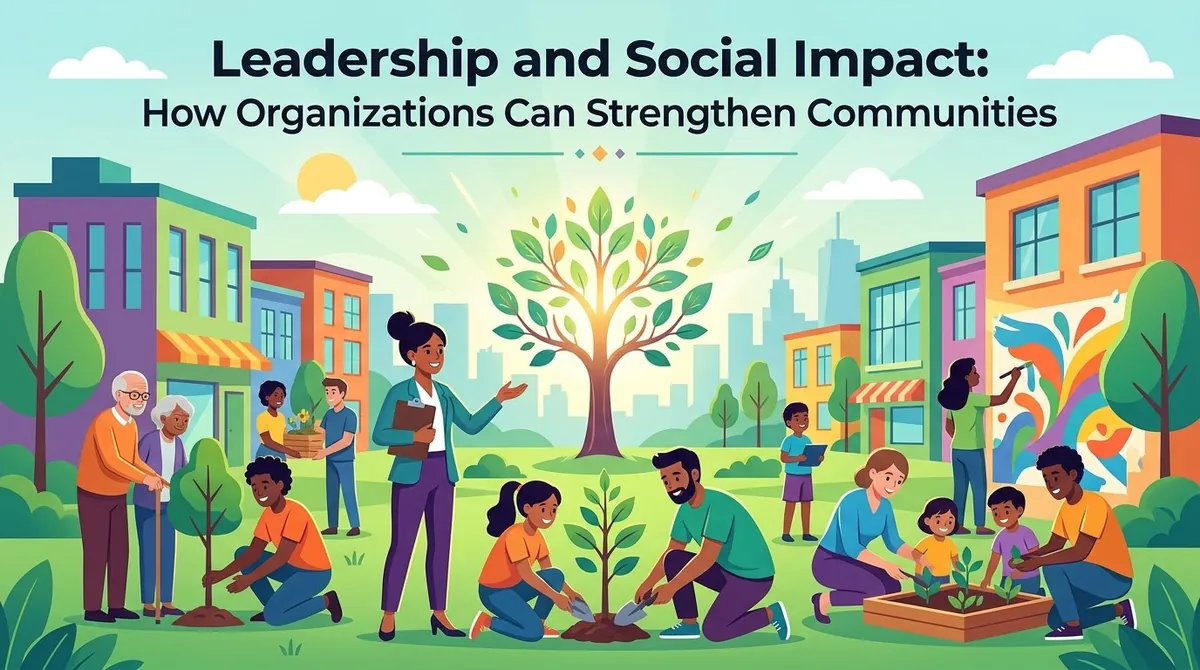
Organizations operate within communities, and their activities can influence local employment, economic development, education, access to services, and environmental conditions. As a result, leadership increasingly involves considering not only business performance but also how organizational decisions affect the communities connected to the business.
Social impact does not require organizations to abandon commercial objectives. Instead, leaders can identify areas where business capabilities and community needs overlap. When approached strategically, community engagement can support both organizational objectives and broader local development.
Understanding Leadership and Social Impact
Social impact refers to the effects an organization's activities can have on people, communities, and society. These effects may be intentional, such as supporting education programs, or indirect, such as creating employment and developing local suppliers.
Leadership plays an important role because organizational priorities influence where resources are allocated and which community initiatives receive attention.
Effective social impact strategies begin with understanding the needs of the communities involved. Rather than assuming what communities require, organizations can engage with local stakeholders and use available information to identify relevant priorities.
Connecting Business Capabilities With Community Needs
Organizations often have resources and expertise that can contribute to community development. These may include technology, professional knowledge, facilities, financial resources, employee skills, or relationships with other organizations.
For example, a technology company could support digital skills training, while a manufacturing business might contribute to technical education or local supplier development.
The most sustainable initiatives are often connected to an organization's existing capabilities. This can make programs easier to maintain and can allow businesses to contribute expertise rather than relying only on financial donations.
The Role of Employees
Employees can play an important role in community engagement. Organizations may support volunteering, skills-based projects, mentoring, fundraising, or other forms of employee participation.
Employee involvement can also create connections between the organization and local communities that would be difficult to establish through financial contributions alone.
Leaders can support participation by providing clear guidelines and appropriate time or resources. At the same time, participation should remain voluntary and aligned with organizational policies.
Supporting Local Economic Development
Businesses can contribute to communities through their normal economic activities. Hiring locally, purchasing from local suppliers, supporting small businesses, and investing in workforce development can all influence local economic conditions.
Organizations can examine their supply chains to identify opportunities to work with local businesses where appropriate. Supplier development programs can also help smaller companies meet quality, operational, or technical requirements.
These approaches connect social impact with everyday business decisions rather than treating community support as a completely separate activity.
Building Partnerships With Community Organizations
Organizations rarely need to address community challenges alone. Partnerships with nonprofit organizations, educational institutions, local businesses, and other community groups can provide additional expertise and knowledge.
Community organizations may have a deeper understanding of local needs and established relationships with residents. Businesses can contribute resources, professional capabilities, technology, or operational expertise.
Clear roles are important in these partnerships. Organizations should establish objectives, responsibilities, expected outcomes, and appropriate methods for evaluating progress.
Creating a Social Impact Strategy
A structured approach can help organizations move from isolated community initiatives toward a more consistent social impact strategy.
Leaders can begin by:
- 1Understanding community priorities: Engage relevant stakeholders and identify issues connected to the organization's activities.
- 2Identifying organizational capabilities: Determine what expertise, resources, and relationships the business can contribute.
- 3Selecting focused initiatives: Prioritize areas where the organization can make a meaningful and sustainable contribution.
- 4Building partnerships: Work with organizations that have relevant local knowledge or complementary capabilities.
- 5Establishing measurable objectives: Define practical outcomes that can be monitored over time.
- 6Reviewing results: Evaluate progress and adjust programs based on evidence and stakeholder feedback.
This approach can help prevent social impact efforts from becoming disconnected collections of short-term activities.
Measuring Community Impact
Measuring social impact can be challenging because community outcomes may develop gradually and can be influenced by many external factors.
Organizations can therefore use a combination of quantitative and qualitative measures. Depending on the initiative, these might include the number of people reached, training participation, employment outcomes, supplier development, educational progression, or changes in access to specific services.
Qualitative feedback can provide additional context. Conversations with community partners and participants can help organizations understand whether a program is addressing the intended need.
Measurement should be used to improve initiatives rather than simply to produce favorable statistics.
Maintaining Long-Term Commitment
Community relationships generally require consistency. A short-term initiative may provide useful support, but long-term programs can create opportunities for deeper partnerships and more sustained results.
Leaders can improve continuity by establishing clear ownership, allocating appropriate resources, and incorporating community initiatives into broader organizational planning.
Long-term commitment also requires flexibility. Community needs can change, and programs may need to evolve as circumstances change.
Common Challenges
Organizations may encounter several challenges when developing social impact programs. One is choosing initiatives that genuinely reflect community needs rather than primarily serving organizational publicity.
Another challenge is balancing short-term business priorities with longer-term community objectives. Clear strategic priorities can help leaders determine which initiatives are realistic and sustainable.
Organizations may also struggle to measure outcomes when the connection between an activity and a broader social result is difficult to establish. Using appropriate indicators and gathering feedback can help provide a more complete picture.
The Future of Leadership and Community Engagement
Social impact is increasingly connected to broader questions about how organizations operate and interact with their stakeholders. Businesses may face greater expectations to understand the effects of their decisions on employees, customers, suppliers, and communities.
Future approaches to community engagement may therefore focus more on partnerships, measurable outcomes, employee participation, and integration with core business activities.
Leadership in this context involves more than launching community programs. It requires understanding local needs, allocating resources responsibly, building relationships, and evaluating whether initiatives are producing meaningful results.
Organizations can strengthen communities in many ways, from supporting local employment and education to sharing expertise and developing partnerships. When these efforts are connected to genuine community priorities and supported over time, they can become a meaningful part of responsible organizational leadership.